
Diesel Generator Classification Guide
Views: 53466 Author: Site Editor Publish Time: 2026-05-12 Origin: Site


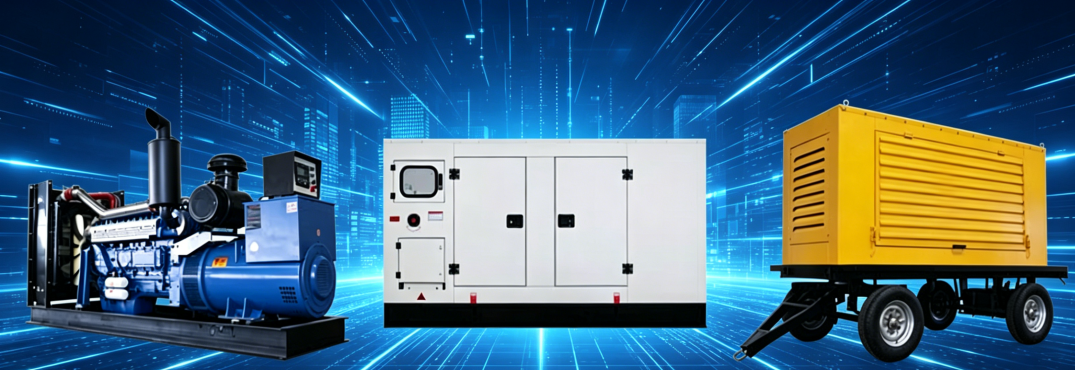
Classification of Diesel Generator Set
Diesel generator sets can be classified in various ways. The common classification methods and their features are as follows:
1. Classification by Appearance and Structure
• Basic Unit: Open-frame type, a common form, supporting manual or automatic start, as well as microcomputer control.
• Silent Unit: Equipped with a soundproof cover and built-in muffler, suitable for noise-sensitive places such as schools and hospitals.
• Vehicle-mounted Unit: Installed in a truck compartment, usually with silent noise reduction treatment, used for emergency power supply.
• Trailer-mounted Unit: Modified from a silent unit with a trailer for easy short-distance movement, applicable to urban emergency power supply.
• Containerized Unit: Installed in a container, generally with a power of over 500kW, suitable for field engineering construction.

2. Classification by Application
• Prime Power Unit: Operates year-round with large capacity, providing continuous power supply for non-constant loads, suitable for areas far from the power grid.
• Standby Unit: Supplies power when the mains supply is interrupted and remains in standby status at all times, suitable for important power consumers such as hospitals and airports.
• Emergency Unit: Starts quickly in case of sudden mains failure, providing power for critical equipment such as fire protection systems and elevators.
3. Classification by Control Mode
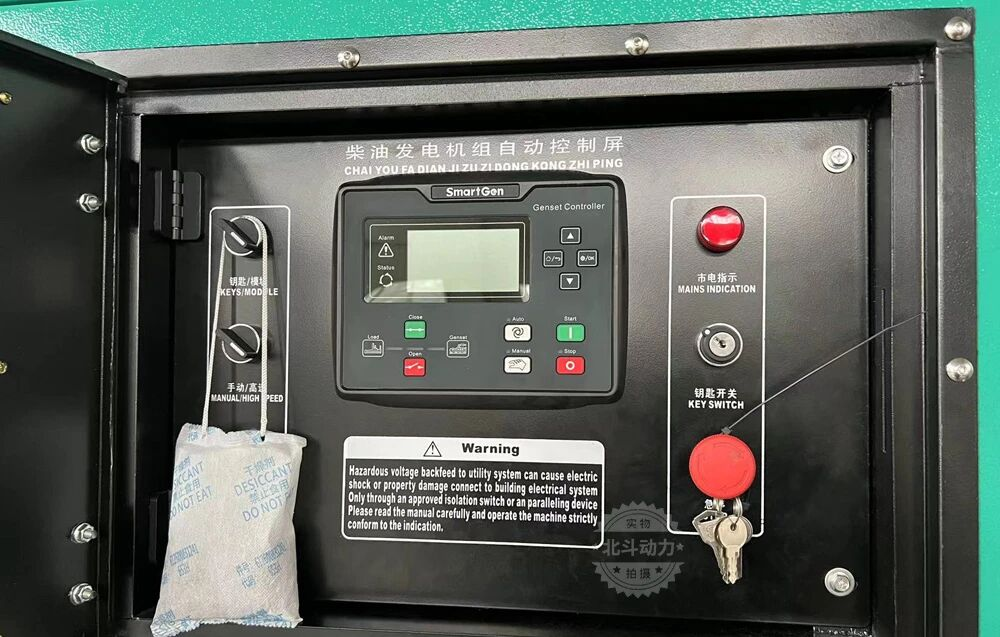
• Manual Unit: Simple control system, requiring on-site operation by operators for starting, switching on, etc.
• Automatic Unit: Capable of automatic starting, operation and shutdown; equipped with an ATS system to realize automatic switching between mains and generator power supply.
• Remote Control Unit: Adopts microcomputer control, enabling remote monitoring and operation through communication interfaces.
• Parallel Unit: Multiple units supply power in parallel or in parallel with the mains, using a fully automatic parallel control system.
4. Classification by Operating Conditions
• Land-use Unit: Including fixed and mobile types, suitable for ordinary environments.
• Marine Unit: Suitable for water environments such as ships.
• Semi-trailer Unit: Easy to move, suitable for occasions requiring frequent relocation.
• Truck-mounted Unit: Installed on a truck, convenient for long-distance movement.
5. Classification by Output Voltage and Frequency of Generator
• AC Generator Set: Including intermediate frequency 40Hz and power frequency 50Hz, with a common rated voltage of 400V.
• DC Generator Set: Uncommon, mainly used for specific applications.
6. Classification by Power Rating
• Continuous Operating Power (COP): Operates at a constant load under specified conditions without time limit.
• Prime Power (PRP): Operates at variable loads, with the average 24-hour power not exceeding 70%.
• Limited Time Operating Power (LTP): Annual operating time not exceeding 500 hours.
• Emergency Standby Power (ESP): Operates when the mains supply is interrupted, with annual operating time not exceeding 200 hours.
7. Classification by Fuel
• Diesel Generator Set: Suitable for various environments.
• Multi-fuel Generator Set: Capable of using multiple fuels with higher flexibility.

